October 22, 2025
Spike Aeration
A healthy, lush lawn begins with healthy soil. One of the most common problems that homeowners face is soil compaction, which prevents grass roots from growing deeply and accessing the nutrients they need. Lawn aeration is the most effective way to relieve soil compaction, improve drainage, and restore your yard to its full potential. In this guide, we’ll explore the causes of patchy soil, the benefits of aeration, and how to implement an effective aeration plan for a thriving lawn.
Understanding Soil Compaction
Soil compaction occurs when soil particles are pressed together, reducing the amount of air, water, and nutrients available to grass roots. Compacted soil is dense, hard, and resistant to water infiltration, which can lead to a variety of lawn problems.
Causes of Soil Compaction
Several factors contribute to soil compaction:
-
Heavy Foot Traffic:
Lawns that experience frequent walking, children playing, or pets running can become compacted over time. -
Vehicles and Equipment:
Parking cars, riding lawn mowers, or other heavy equipment on grass areas compresses the soil. -
Clay-Heavy Soil:
Clay soils are naturally denser and more prone to compaction than sandy soils. -
Rain and Irrigation:
Frequent watering or heavy rainfall on poorly drained areas can compact the soil, especially when combined with foot traffic. -
Construction or Landscaping Work:
Recent construction or major landscaping can disturb and compact the soil, leaving patches and poor growth areas.
The effects of soil compaction are often visible as thin, patchy grass, pooling water, slow growth, and weak root systems.
Signs of Patchy Lawns Due to Soil Compaction
Patchy lawns are a common symptom of soil compaction, but they can also result from other issues like pests, disease, or improper fertilization. When soil compaction is the culprit, the patches usually share certain characteristics:
-
Thin Grass Growth: Grass struggles to grow through dense soil, leading to bare or thin areas.
-
Water Pooling: Compacted soil prevents proper drainage, causing puddles after rain or irrigation.
-
Hard, Dense Soil: When you step on the lawn, the soil feels hard and resistant.
-
Slow Grass Recovery: Damaged areas take longer to recover due to limited root growth.
By identifying soil compaction as the cause of your patchy lawn, you can take targeted action to correct it.
What is Lawn Aeration?
Lawn aeration is the process of creating small openings in the soil to allow air, water, and nutrients to penetrate the grass roots. This helps alleviate soil compaction, improves drainage, and encourages stronger root growth. There are two main types of aeration, each with its own benefits and use cases.
Core Aeration
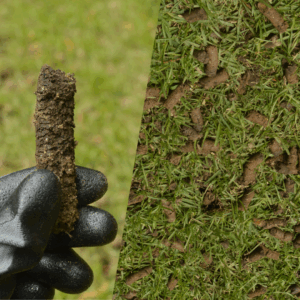
Core aeration, also known as plug aeration, is a method that removes small plugs of soil from your lawn. These plugs create open spaces that allow air, water, and nutrients to reach the grass roots more effectively. Core aeration is particularly effective at relieving soil compaction and is ideal for lawns with clay-heavy or densely compacted soil. By removing plugs, this method promotes deeper root growth, healthier turf, and improved overall lawn resilience.